
The push for no tax on suppressors has become one of the most discussed topics in the firearms community. Gun owners across the country, including right here in Oregon, are eagerly following legislative efforts to eliminate the burdensome $200 transfer tax and streamline suppressor ownership.
At AI Fingerprinting, we’ve helped countless Oregon residents navigate the current NFA application process for suppressor purchases. As conversations about no tax on suppressors gain momentum in Congress, we’re committed to keeping our clients informed about both present requirements and potential regulatory changes.
This comprehensive guide explores the movement toward no tax on suppressors, explains what elimination of the transfer tax would mean for gun owners, and provides essential information about navigating today’s requirements while supporting tomorrow’s reforms.
Understanding the Current Suppressor Tax System
Before diving into the movement for no tax on suppressors, it’s crucial to understand the existing regulatory framework. The National Firearms Act of 1934 established the $200 transfer tax for suppressors and other regulated items.
When Congress passed the NFA in 1934, $200 represented an enormous sum—equivalent to approximately $4,500 in today’s dollars. The intent was to make these items prohibitively expensive, effectively pricing most Americans out of legal ownership.
Today, that same $200 tax remains in place despite decades of inflation. While the relative cost has decreased significantly, the bureaucratic burden has actually increased as ATF processing times stretch months or even years for some applications.
Every suppressor transfer requires payment of this tax. Whether you’re buying from a dealer, receiving one as a gift, or inheriting suppressors from an estate, the $200 tax applies to each individual transfer.
The tax generates relatively little revenue for the federal government. Meanwhile, processing Form 4 applications consumes substantial ATF resources that could be directed toward genuine law enforcement priorities rather than paperwork for lawful gun owners.
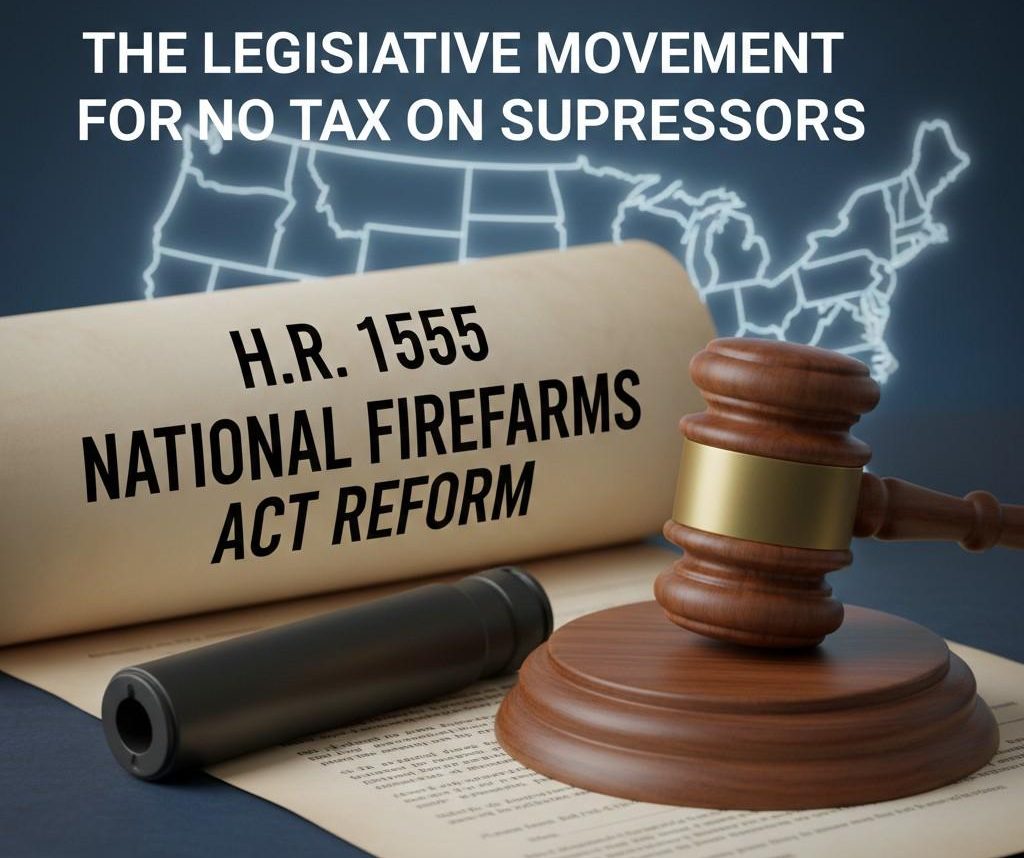
The Legislative Movement for No Tax on Suppressors
Advocacy for no tax on suppressors has grown dramatically over the past decade. Multiple bills have been introduced in Congress, reflecting increasing recognition that suppressors are safety equipment rather than dangerous weapons.
The Hearing Protection Act represents the most prominent effort toward no tax on suppressors. First introduced in 2015 and reintroduced in subsequent congressional sessions, this legislation proposes removing suppressors from NFA regulation entirely.
Congressional support for no tax on suppressors has expanded beyond traditional Second Amendment advocates. Representatives from rural and suburban districts have recognized the hearing protection benefits and noise reduction advantages that suppressors provide.
Bipartisan coalitions are forming around no tax on suppressors. While gun rights traditionally align with conservative politics, the public health argument for hearing protection resonates across party lines, creating unexpected alliances.
Industry advocacy groups have invested heavily in promoting no tax on suppressors. The American Suppressor Association leads lobbying efforts, providing legislators with data, expert testimony, and constituent communication tools.
Grassroots support has reached unprecedented levels. As suppressor ownership has increased despite current barriers, more Americans understand these devices firsthand, dispelling Hollywood myths and building authentic support for no tax on suppressors.
What No Tax on Suppressors Would Actually Mean
If legislation achieves no tax on suppressors, the impact on American gun owners would be immediate and substantial. Understanding these potential changes helps prepare for a reformed regulatory environment.
The most obvious benefit of no tax on suppressors is cost savings. Eliminating the $200-per-item tax makes hearing protection accessible to millions more Americans, particularly those interested in purchasing multiple suppressors for different firearms.
Simplified purchasing processes would accompany no tax on suppressors. Most reform proposals would treat suppressors like standard firearm accessories, requiring only the NICS background check that applies to regular gun purchases.
Wait times would essentially disappear under no tax on suppressors legislation. Instead of waiting months for ATF approval, purchasers could take possession immediately after passing instant background checks, just like buying any other firearm component.
The fingerprinting requirement would likely be eliminated with no tax on suppressors. Current NFA applications mandate FBI fingerprint cards, but most reform proposals would remove this requirement entirely.
Market expansion would follow no tax on suppressors. Removing barriers would dramatically increase demand, encouraging innovation, competition, and price reductions that benefit all consumers.
Why No Tax on Suppressors Makes Sense
The arguments supporting no tax on suppressors extend far beyond simple preference for less regulation. Compelling safety, constitutional, and practical considerations justify reform.
Hearing protection is the primary reason for no tax on suppressors. Firearm noise causes permanent, irreversible hearing damage. Suppressors reduce sound to safer levels, protecting shooters’ hearing while still producing noise well above “Hollywood quiet” levels.
Suppressors reduce noise pollution for entire communities. Shooting ranges face constant complaints from nearby residents about excessive noise. Widespread adoption enabled by no tax on suppressors would improve relations between shooting facilities and neighbors.
Training effectiveness improves dramatically with suppressors. New shooters often develop flinching habits from loud muzzle blasts. Reduced noise allows better focus on proper technique, creating safer, more competent shooters.
Constitutional arguments support no tax on suppressors. Second Amendment advocates contend that taxing and restricting common firearm accessories infringes on constitutional rights without serving compelling government interests.
International precedents demonstrate no tax on suppressors wouldn’t compromise safety. Many European countries with strict gun control treat suppressors as safety equipment, with some requiring their use for hunting to protect hearing and reduce noise.
Current Requirements While Reform Is Pending
Despite momentum toward no tax on suppressors, existing law remains in full effect. Oregon residents interested in suppressor ownership must navigate current NFA requirements until reform becomes reality.
ATF Form 4 remains mandatory for all suppressor transfers. This comprehensive application collects detailed personal information, firearm serial numbers, and initiates the background check process through the FBI.
Professional fingerprinting services are essential under current regulations. Two FBI-approved fingerprint cards must accompany every Form 4 application. Quality prints prevent delays and rejections that extend already lengthy wait times.
The $200 transfer tax must be paid with each Form 4 submission. Payment methods include check, money order, or credit card for electronic applications. This tax is non-refundable even if applications are ultimately denied.
Photographs are required alongside fingerprints. Two passport-style photos less than one year old must accompany your application. These photos, combined with fingerprints, provide comprehensive biometric identification.
Background checks remain thorough and time-consuming. Using your fingerprints, the FBI searches national criminal databases, verifying eligibility under federal law before ATF approves your transfer.
Oregon’s Position on Suppressor Ownership
Oregon gun owners have particular interest in no tax on suppressors given the state’s generally favorable firearms regulations. Understanding Oregon’s current stance helps residents navigate both present requirements and potential reforms.
Oregon law permits suppressor ownership under federal NFA compliance. The state imposes no additional registration, permits, or restrictions beyond federal requirements, making Oregon one of the more suppressor-friendly states.
Hunting with suppressors is fully legal throughout Oregon. The state recognizes these devices as hearing protection rather than poaching tools, allowing their use for all legal hunting where firearms are permitted.
Oregon has no state-level waiting periods beyond federal requirements. Once your federal Form 4 is approved and you’ve paid the tax, you can take possession immediately without additional state-mandated delays.
Local ordinances rarely restrict suppressors in Oregon. Most municipalities defer to state and federal law rather than imposing additional restrictions on NFA items, creating consistent regulations statewide.
Oregon’s congressional delegation includes representatives open to no tax on suppressors. Constituent communication expressing support for reform legislation can influence voting decisions and advance the cause.
The Role of Professional Fingerprinting Services
While working toward no tax on suppressors, current law still requires professional fingerprinting for all NFA applications. AI Fingerprinting provides essential services for Oregon residents navigating these requirements.
Our experience with NFA applications ensures your fingerprint cards meet strict ATF standards. We’ve processed thousands of suppressor applications and understand exactly what the agency requires for approval.
We use FBI-approved FD-258 fingerprint cards exclusively. These specialized cards contain proper fields and formats required for NFA applications, preventing automatic rejections based on incorrect materials.
Quality control is paramount in our process. We carefully review each card before release, ensuring clear, complete prints that will pass ATF scrutiny on first submission without requiring costly and time-consuming resubmissions.
Convenient scheduling accommodates busy lifestyles. We offer flexible appointment times, including evenings and weekends when available, ensuring fingerprinting doesn’t disrupt work schedules or family commitments.
Competitive pricing keeps our services accessible. While we work toward no tax on suppressors, we ensure current fingerprinting requirements don’t create additional financial burdens beyond the already substantial transfer tax.
How Electronic Form 4 Has Improved the Process
The ATF’s implementation of electronic Form 4 filing represents significant progress even without achieving no tax on suppressors. Understanding eForms helps applicants navigate current processes more efficiently.
Electronic submissions have dramatically reduced processing times. Recent eForm 4 applications see approvals in 60-90 days compared to 6-12 months for paper applications, bringing suppressors to owners much faster.
Digital fingerprint submission integrates with eForms. While traditional fingerprint cards remain common, some dealers now use electronic scanners that upload prints directly to ATF systems.
Real-time status checking is available through eForms. Applicants can log into their accounts and monitor application progress, providing transparency that paper submissions completely lacked.
Error reduction benefits from electronic validation. The eForm system catches common mistakes before submission, preventing rejections that would significantly delay processing timelines.
However, eForms don’t eliminate fundamental barriers that no tax on suppressors would address. The $200 tax, multi-month wait times, and extensive regulatory burden remain significant obstacles to lawful ownership.
Common Misconceptions About Suppressors
Misunderstandings about suppressors have historically impeded progress toward no tax on suppressors. Addressing these myths supports reform efforts and educates the public accurately.
Suppressors don’t make guns silent. Despite Hollywood depictions showing nearly silent gunfire, suppressed firearms remain quite loud—typically 130-140 decibels, equivalent to jackhammers or chainsaw noise levels.
Criminals rarely use suppressors in crimes. FBI statistics consistently show suppressors appear in only a tiny fraction of criminal incidents. The NFA process and cost deter criminal acquisition while burdening lawful owners.
Suppressors don’t increase lethality or make bullets more dangerous. These devices simply redirect expanding gases to reduce noise. They don’t affect bullet velocity, energy, or terminal ballistics in any meaningful way.
Most developed nations treat suppressors as safety equipment. Countries like the United Kingdom, France, Norway, and Finland encourage or require suppressor use, demonstrating these devices aren’t inherently dangerous.
The current tax doesn’t serve legitimate purposes. Revenue from suppressor taxes represents a minuscule fraction of federal income while the registration system consumes substantial ATF resources better directed toward actual crime prevention.
Economic Impact of No Tax on Suppressors
Achieving no tax on suppressors would create substantial economic effects throughout the firearms industry and related sectors. These impacts extend far beyond simple manufacturer profits.
Suppressor manufacturers would see dramatic demand increases with no tax on suppressors. Removing the $200 barrier and lengthy wait times would expand the customer base exponentially, driving significant manufacturing growth.
Job creation would follow industry expansion. Increased suppressor production requires additional manufacturing workers, engineers, quality control staff, customer service representatives, and supporting roles throughout supply chains.
Retail firearms dealers would benefit from simplified sales. No tax on suppressors eliminates complex paperwork and long waiting periods, making suppressors as easy to sell as any other firearm accessory.
Related industries would experience growth. Companies producing mounting systems, cleaning tools, and suppressor-compatible firearms would see increased demand as ownership becomes mainstream.
Tax revenue effects are complex. While eliminating the transfer tax removes that income stream, increased sales volume generates other revenues through corporate income taxes, payroll taxes, and state sales taxes.
Training and Safety Benefits of Wider Access
Beyond regulatory and economic arguments, no tax on suppressors would improve firearms training and safety throughout the country. These practical benefits strengthen the reform case.
New shooters learn faster with reduced noise. Loud muzzle blasts cause flinching and anxiety that interfere with proper technique development. Suppressors allow better focus on fundamentals like sight picture and trigger control.
Communication improves dramatically at shooting ranges. Instructors can provide real-time feedback without shouting or relying solely on bulky electronic hearing protection, significantly enhancing the learning experience.
Situational awareness increases during defensive training. Suppressors allow shooters to maintain better hearing of their surroundings during courses of fire, developing skills more applicable to real-world self-defense situations.
Youth shooting sports become more accessible. Introducing children to shooting is easier when noise doesn’t frighten young participants, building the next generation of responsible gun owners.
Reduced noise complaints protect shooting facilities. Neighbors are more tolerant of nearby ranges when noise pollution decreases, protecting facilities from closure pressures and restrictive zoning challenges.
How to Support No Tax on Suppressors
Gun owners who support no tax on suppressors can take concrete actions to advance reform efforts. Effective advocacy requires sustained engagement beyond simply hoping for change.
Contact your congressional representatives regularly. Express support for no tax on suppressors through phone calls, emails, and in-person meetings at town halls. Legislators respond to constituent communication.
Join advocacy organizations working toward no tax on suppressors. Groups like the American Suppressor Association fund lobbying efforts, legal challenges, and public education campaigns advancing the reform movement.
Educate others about suppressor realities. Correcting misconceptions among friends, family, and social media contacts builds public support for no tax on suppressors and counters opposition based on Hollywood myths.
Support businesses that advocate for reform. Firearms manufacturers and dealers who actively promote no tax on suppressors deserve customer loyalty. Your purchases fund their advocacy efforts.
Participate in public comment periods when regulations change. The ATF occasionally solicits public input on NFA procedures. Submitting well-reasoned comments supporting no tax on suppressors creates official records of public sentiment.
What Happens to Existing Tax Stamps If Reform Passes
Many current suppressor owners wonder how no tax on suppressors legislation would affect their existing NFA items. Understanding likely scenarios helps owners prepare for potential changes.
Most reform proposals include refund provisions. The Hearing Protection Act, for example, would refund transfer taxes paid after the bill’s introduction date, potentially returning $200 to recent purchasers.
Existing suppressors would likely remain legal without additional action. No tax on suppressors legislation typically includes grandfather clauses ensuring current owners retain their property without new requirements.
Form 4 paperwork would probably remain valid proof of ownership. Even if registration requirements are eliminated going forward, existing approved forms document your legal acquisition of suppressors.
Future transfers of grandfathered suppressors might avoid taxes. If you sell a suppressor you purchased before reform, no tax on suppressors rules would likely apply to that transfer, benefiting both buyer and seller.
The ATF would issue guidance clarifying transitional procedures. When reform passes, the agency will publish instructions explaining how no tax on suppressors affects existing owners and pending applications.
The Timeline for No Tax on Suppressors
Predicting exactly when no tax on suppressors will become law is impossible, but understanding legislative processes helps set realistic expectations for reform advocates.
Multiple factors influence timeline for no tax on suppressors. Congressional priorities shift with elections, economic conditions, and current events. Firearms legislation often faces particular challenges in divided government.
Incremental reforms may precede complete no tax on suppressors. Reduced tax amounts, streamlined processes, or exemptions for certain purchasers could serve as stepping stones toward full deregulation.
Public opinion trends favor no tax on suppressors. As more Americans understand suppressors as hearing protection rather than criminal tools, political pressure on legislators to support reform increases.
State-level preparations will smooth federal transitions. States developing regulatory frameworks for a post-NFA environment will implement changes more efficiently when federal no tax on suppressors becomes law.
Sustained advocacy remains essential regardless of timeline. Even if reform takes longer than hoped, continued pressure on legislators keeps no tax on suppressors on the political agenda.
How AI Fingerprinting Supports Current Compliance
Until no tax on suppressors becomes reality, Oregon residents must comply with existing NFA requirements. AI Fingerprinting provides essential services ensuring your applications succeed.
Our expertise with NFA applications protects your investment. We understand ATF requirements and ensure your fingerprint cards meet standards necessary for approval, preventing costly delays.
We serve clients throughout Oregon with convenient locations. Whether you’re in Portland, Eugene, Salem, or surrounding communities, professional fingerprinting services are accessible when you need them.
Our services extend beyond basic fingerprinting. We also provide notary services and translation services, offering comprehensive support for various documentation needs related to firearms ownership and other applications.
Quality assurance minimizes rejection risks. We carefully review each set of fingerprints before submission, ensuring they meet FBI and ATF standards that prevent processing delays.
We stay current on regulatory changes. As discussions about no tax on suppressors progress, we monitor developments and inform clients about how potential reforms might affect their applications.
Preparing for a Post-Reform Environment
Smart gun owners can prepare now for the possibility of no tax on suppressors becoming reality. Taking certain steps positions you to benefit immediately when reform occurs.
Stay informed about legislative developments. Follow organizations advocating for no tax on suppressors to receive updates on bill progress, congressional votes, and opportunities for advocacy.
Consider timing of suppressor purchases strategically. Some legislation includes provisions refunding taxes paid after specific dates, potentially allowing you to recover your $200 if you purchase shortly before reform passes.
Maintain organized records of all NFA purchases. Approved Form 4 documents prove legal ownership. Even if no tax on suppressors eliminates future requirements, existing paperwork remains valuable.
Build relationships with knowledgeable firearms dealers. FFL holders who specialize in NFA items will understand how no tax on suppressors affects inventory, pricing, and transfer procedures once reform occurs.
Educate yourself about suppressor operation and maintenance. When no tax on suppressors removes barriers to ownership, being prepared to use and maintain these devices responsibly ensures positive experiences.
The Future Beyond No Tax on Suppressors
While achieving no tax on suppressors represents a major goal, the broader firearms freedom movement extends to other NFA items and regulations deserving reform.
Short-barreled rifles and shotguns face similar unnecessary restrictions. The same arguments supporting no tax on suppressors apply to these items, suggesting they could follow in future deregulation efforts.
The National Firearms Act itself faces constitutional challenges. Some advocates argue the entire NFA framework violates Second Amendment protections and should be repealed or substantially reformed.
Interstate transport restrictions could be next after no tax on suppressors. Current rules requiring ATF notification for crossing state lines with NFA items burden lawful owners without serving clear safety purposes.
Dealer transfer requirements might be simplified. Some reforms propose allowing direct person-to-person NFA transfers with instant background checks, similar to procedures in many states for conventional firearms.
The ultimate goal extends beyond no tax on suppressors to comprehensive firearms freedom. Each successful reform builds momentum for additional changes that respect constitutional rights while maintaining genuine safety measures.
Conclusion: Moving Forward With Confidence
The movement toward no tax on suppressors represents important progress for gun rights, hearing protection, and rational regulation. While reform hasn’t yet succeeded, momentum continues building toward eventual victory.
Until no tax on suppressors becomes reality, Oregon residents must navigate current NFA requirements. Professional fingerprinting services remain essential for compliant suppressor acquisitions under existing law.
At AI Fingerprinting, we support both current compliance and future reform. We provide the professional fingerprinting services required today while encouraging advocacy for regulatory changes that will benefit gun owners tomorrow.
Quality fingerprint cards ensure your current applications proceed smoothly. Our experience with NFA requirements protects your investment in suppressors by preventing delays, rejections, and unnecessary complications.
We encourage all clients to support legislative efforts toward no tax on suppressors. Contact your representatives, join advocacy organizations, and educate others about the realities of these valuable hearing protection devices.
Whether you’re pursuing your first suppressor or building an extensive collection, AI Fingerprinting is your partner throughout the process. Contact us today to schedule your fingerprinting appointment.
Together, we can navigate today’s requirements while working toward tomorrow’s reforms. The goal of no tax on suppressors is achievable—and we’re here to support you every step of the way.
Need help with this? AI Fingerprinting provides NFA fingerprinting in Vancouver, WA. Book an appointment online or call (360) 998-7302.