
If you’ve ever applied for a job that requires a background check, pursued a professional license, or gone through an immigration process, chances are you’ve been asked to complete an FD-258 Fingerprint Card. It sounds straightforward, but many applicants are caught off guard by the specific requirements, the ink quality standards, and the exact steps needed to get the form accepted on the first submission.
At AI Fingerprinting Services in Vancouver, WA, this is the single most asked-about topic we receive. So we’ve put together this comprehensive, up-to-date guide to walk you through everything you need to know about the FD-258 Fingerprint Card — the right way.
What Is the FD-258 Fingerprint Card?
The FD-258 Fingerprint Card, officially known as the Applicant Fingerprint Form, is a standard document used by the Federal Bureau of Investigation (FBI) to collect an individual’s ink roll fingerprints for identity verification and criminal history background checks.
This card is a physical, paper-based form that captures rolled and flat impressions of all ten fingers. It is widely used across federal, state, and local agencies for a variety of fingerprint-based background screening purposes. Unlike live scan fingerprinting, which captures digital impressions, the FD-258 is an analog format that is still required by many agencies — particularly those operating at the federal level.
The form itself may look simple, but it follows strict FBI fingerprint submission standards. A single smudge, incomplete box, or incorrect demographic entry can result in rejection — costing you time and potentially delaying your application.
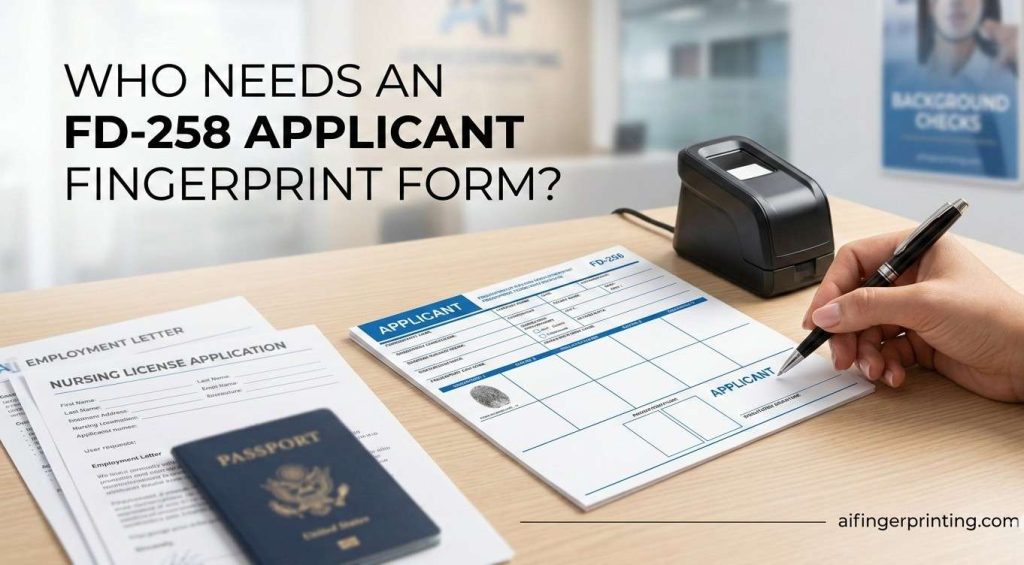
Who Needs an FD-258 Applicant Fingerprint Form?
The FD-258 form is required in a surprisingly wide range of situations. Understanding whether you need this specific card — versus another fingerprinting method — is critical before scheduling your appointment.
You will typically be asked to submit an FD-258 Fingerprint Card if you are:
Applying for federal employment or federal contracting positions, seeking adoption approval through domestic or international agencies, going through the immigration or naturalization process with USCIS, applying for a firearms license (FFL) through the ATF, obtaining certain professional licenses in healthcare, law, education, or finance, completing requirements for military service clearances, or applying for volunteer positions that work with vulnerable populations.
In many of these cases, the requesting agency will either provide you with a blank FD-258 card, or they will expect you to bring one to your fingerprinting appointment. It’s always best to confirm in advance with your requesting agency which method — ink card fingerprinting or live scan — they accept.
The Difference Between FD-258 Ink Fingerprinting and Live Scan
One of the most common points of confusion is the difference between the FD-258 ink roll fingerprinting process and live scan digital fingerprinting.
Live scan fingerprinting captures your fingerprints electronically, transmits them digitally to the FBI or state repository, and generally returns results faster. Most state-level background checks in Oregon and Washington accept live scan.
However, FD-258 card-based ink fingerprinting is still required when:
The requesting agency is federal and does not accept electronic submissions, you are submitting prints to an agency outside the United States, the agency requires a physical, wet-ink fingerprint card for their records, or your prints need to be mailed directly to the FBI or another body.
The FD-258 card uses traditional printer’s ink or fingerprint ink pads rolled carefully across specially coated cardstock. The result must be clean, clear, and free from smearing. This is why professional ink roll fingerprinting services — rather than self-administered kits — are strongly recommended.
How to Fill Out the FD-258 Fingerprint Card Correctly
Filling out the FD-258 Applicant Fingerprint Form involves more than just pressing your fingers onto paper. Every section of the card must be completed accurately. Here’s what you need to know:
Demographic Information Section
The top portion of the FD-258 card requires personal information including your full legal name (last, first, middle), date of birth, place of birth, sex, race, height, weight, eye color, hair color, your Social Security Number (SSN), and your signature.
Every field must be filled in completely. Leaving any box blank — even fields like hair color — can result in FBI rejection of the card. Use dark ink (typically black ballpoint pen) and print legibly. Do not use correction fluid or tape on the card.
ORI Number and Contributor Fields
The ORI (Originating Agency Identifier) is a code specific to the agency requesting your fingerprints. This number must be entered accurately in the designated field. Your fingerprinting service provider may also complete this section on your behalf. If you are unsure of your ORI number, contact the requesting agency before your appointment.
Reason Fingerprinted
This field tells the FBI or reviewing agency why the prints are being collected — for example, “Applicant,” “Employment,” “Licensing,” “Immigration,” or another official reason. This must match the purpose stated by your requesting agency.
Fingerprint Impressions
The lower half of the card contains labeled boxes for each of the ten individual rolled fingerprints, plus boxes for flat (plain) impressions of all fingers together. The rolled impressions must show the full ridge pattern — tip to below the first joint — with consistent, moderate ink pressure.
5 Most Common Reasons an FD-258 Card Gets Rejected
Even when completed with good intentions, FD-258 fingerprint cards are frequently rejected by the FBI’s Criminal Justice Information Services (CJIS) Division. Here are the most common reasons:
1. Smudged or Smeared Fingerprint Impressions
This is the number one reason for rejection. Too much ink, too little pressure, or movement during rolling causes smearing that obscures the ridge detail the FBI needs to make a match.
2. Incomplete Demographic Information
Any blank field on the FD-258 form — even minor ones — will result in the card being returned. Fill in every box completely.
3. Poor Quality Ink or Non-Standard Cards
Using low-quality ink pads, copy paper instead of official cardstock, or expired cards can all lead to rejection. Only use FBI-approved FD-258 card stock and professional-grade fingerprinting ink.
4. Incorrect or Missing ORI Number
Without the correct ORI code, the FBI cannot route the background check to the correct agency. Always verify this number before submission.
5. Damaged or Folded Cards
The FD-258 card must arrive at the processing facility in pristine condition. Folding, crumpling, or exposing the card to moisture can render it unacceptable.
Where to Get Professional FD-258 Fingerprinting in Vancouver, WA
If you’re in Vancouver, WA or the surrounding area — including Portland, OR — AI Fingerprinting Services offers professional FD-258 ink roll fingerprinting performed by trained specialists.
We understand the exact standards required by the FBI’s CJIS Division and ensure that every card we complete meets those requirements the first time. Here’s what sets our service apart:
Trained, Certified Fingerprint Technicians
Our technicians are experienced in rolled ink fingerprinting techniques that produce clean, accurate impressions on every finger. We take the time to ensure each box is filled with the appropriate ridge detail, reducing your risk of FBI card rejection.
Official FD-258 Card Stock
We use only FBI-approved FD-258 fingerprint card stock, ensuring your submission meets physical standards from the start.
Complete Form Assistance
We help you fill in every required demographic field, verify your ORI number, confirm the reason fingerprinted, and double-check your signature — so nothing is missed before your card is sealed and ready for submission.
Walk-Ins and Appointments Welcome
Whether you need your FD-258 Applicant Fingerprint Form completed urgently or want to schedule ahead, we accommodate both walk-in clients and scheduled appointments. Our office is conveniently located in Vancouver, WA, just minutes from the Oregon border.
How Long Does an FD-258 Fingerprint Submission Take to Process?
Once your FD-258 card is completed and mailed to the appropriate agency or the FBI, processing times can vary significantly depending on the purpose and the receiving body.
For FBI Identity History Summary Checks (also known as a federal rap sheet), the standard processing time is typically 3 to 5 business days after the card is received, though it can extend to several weeks during high-volume periods.
For USCIS immigration fingerprinting, processing times depend on the overall immigration application timeline and can range from weeks to months.
For state licensing boards or professional certification agencies that accept the FD-258, turnaround depends on the specific agency but is often 2 to 4 weeks.
It’s important to note that mailing time is not included in processing time. Plan to send your FD-258 card via certified or priority mail to ensure it arrives safely and you have proof of delivery.
Tips to Make Sure Your FD-258 Fingerprint Card Is Accepted the First Time
To maximize your chances of first-time acceptance, follow these best practices recommended by FBI fingerprinting professionals:
Always use a professional fingerprinting service rather than attempting to self-ink at home. Bring a government-issued photo ID to your fingerprinting appointment. Know your ORI number before arriving. Confirm with your requesting agency whether they want you to mail the card directly or whether your fingerprint provider should send it. Avoid lotion or hand cream for at least an hour before your appointment, as these substances can interfere with ink adhesion and ridge clarity. Keep your completed card flat and uncreased inside a protective sleeve or envelope until it is submitted.
Why the FD-258 Fingerprint Card Still Matters in 2026
In an era dominated by digital biometrics and electronic identity verification, you might wonder why the FD-258 Applicant Fingerprint Form is still in use. The answer lies in the decentralized nature of government and law enforcement agencies.
Many federal agencies, international bodies, and older institutional frameworks still rely on physical ink fingerprint cards as part of their verification infrastructure. The FBI’s CJIS Division continues to process millions of FD-258 cards annually alongside digital submissions. Until all agencies fully transition to electronic fingerprint submission, the FD-258 card will remain a critical document in the identity verification and background screening ecosystem.
Furthermore, many background check purposes — particularly those involving international travel, foreign employment, or cross-border adoption — still specifically require the physical FD-258 ink card because the receiving foreign government or institution does not have access to U.S. live scan networks.
Ready to Complete Your FD-258 Fingerprint Card? Visit AI Fingerprinting in Vancouver, WA
Whether you’re completing the FD-258 Applicant Fingerprint Form for a federal job, immigration process, professional license, or any other official purpose, getting it done right the first time saves you time, money, and stress.
At AI Fingerprinting Services in Vancouver, WA, our experienced technicians are ready to help you complete your FD-258 fingerprint card quickly, accurately, and in full compliance with FBI submission standards. We serve clients from Vancouver, WA, Portland, OR, and all surrounding communities.
📍 Visit us at: aifingerprinting.com 📞 Call or book your appointment today and experience professional ink roll fingerprinting you can trust.